Educational Games
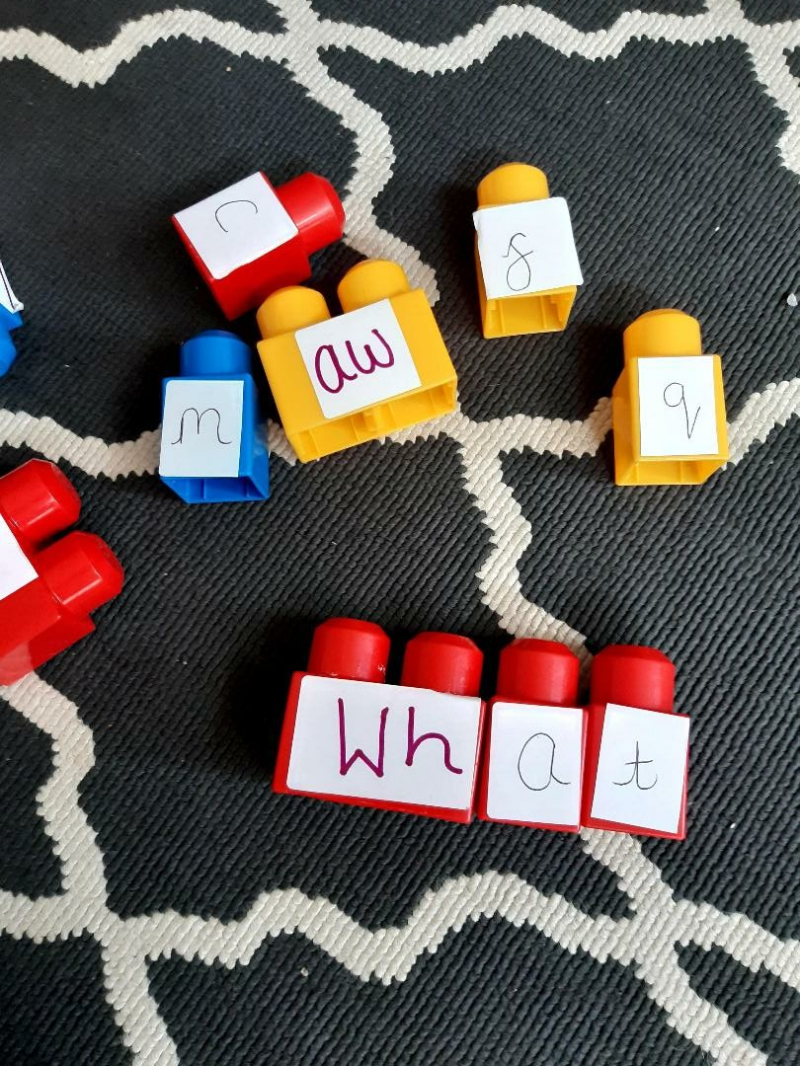
Letter Lego blocks
Equipment you will need:
Paper, pen and Lego/Duplo blocks
This is a great hands on phonics activity and can be changed and adapted depending on what phase children are working on. It is simple and quick to set up, I used sticky labels and on each one I wrote phase 4 and phase 5 diagraphs and then every letter of the alphabet. I set it up during our play, this is an invitation for the children to come and play and explore. Explain and ask about what diagraphs they can see and give them challenges to see what words they can make. You could even write out some words for them to try and make using the correct diagraphs they need. For younger children you may ask them to put the blocks in alphabetical order. For older children an extension after the diagraphs would be to see if they can make any sentences or any questions and add blocks with punctuation on.
This activity can be revisited and the diagraphs could be changed up as the children progress through the phases of phonics.
Find it and spell it
Equipment you will need:
A pen and paper
Find and spell it is a simple activity that needs no set up. The aim of this game is how many objects can you find and spell in a set amount of time. The time you set would change depending on age and ability of the children you are with. The reason I added a time limit in to the game was to make it engaging and fun for children as they love racing against the clock.
Ask the children if they can find an object from around the room and bring it back to the table. See if they can spell it out. For example if they found a train and brought it back they would have to spell the word train. Let them know they have for example 5 minutes to spell 3 words.
This activity is great for spelling and learning new words. It is a great way to put diagraphs that you have been learning in phonics into play. This game can be adapted for younger children by asking them to find an object and then drawing it on paper to encourage using the pencil and making marks which are the first stages of writing.
Uno Numbers
Equipment you will need:
Uno cards or normal playing cards, a dice
This game is great for mathematical development as well as turn taking.
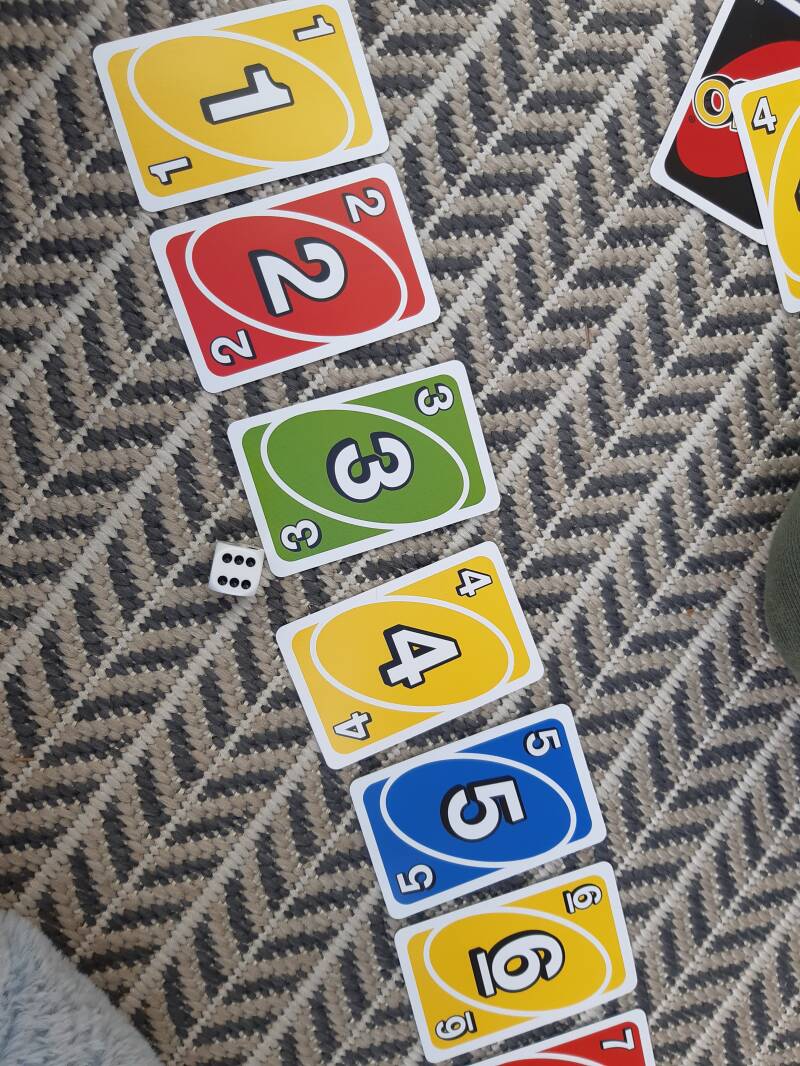
Find numbers 1-6 on the cards. Make sure every player has a set of cards from 1-6. Lay the cards with the numbers facing down and roll the dice. Whichever number the dice lands on you turn that card over, for example you rolled a 6 so you turn over number 6. Keep rolling and taking turns. The winner is the person who has turned all their cards over first. We extended this activity by doing numbers 1-9 and using 2 dice adding the numbers on both dices to make a number.
This activity is great for number recognition as well as adding numbers together. From a young age children will start to use numbers in their play and will start to link and recognise numbers. Games like these can be changed depending on what stage of number recognition the child is at.
Ladybird Halves
Equipment you will need:
Cut out ladybirds
This game encourages children to add, takeaway, double and half numbers. This is a fun treasure hunt that will help expand a child’s mathematical skills. For this game you will need to prepare some ladybirds with spots on and some questions. Place them around a room.
Place your ladybirds around the room and ask the children questions about the lady birds. Some ideas are have a ladybird with 12 spots and ask them to find the ladybird with half of 24, or can you find the lady bird with double 5 and they will go and hunt for the one with 10 spots.
This game encourages counting and recognising groups of numbers as well as making it fun and engaging. It can be a race to find them. This game can be adapted to suit the age and stage of the children you are playing it with. Instead of spots you might want to have the number on their wings. Instead of halving and doubling you may want to do some adding and takeaway sums. For example can you find me 4+3 so they would go and find the ladybird with 7 spots.